

Pasture-Raised Eggs and Veggies: A Better Breakfast on the Road to a Healthier Life

Share

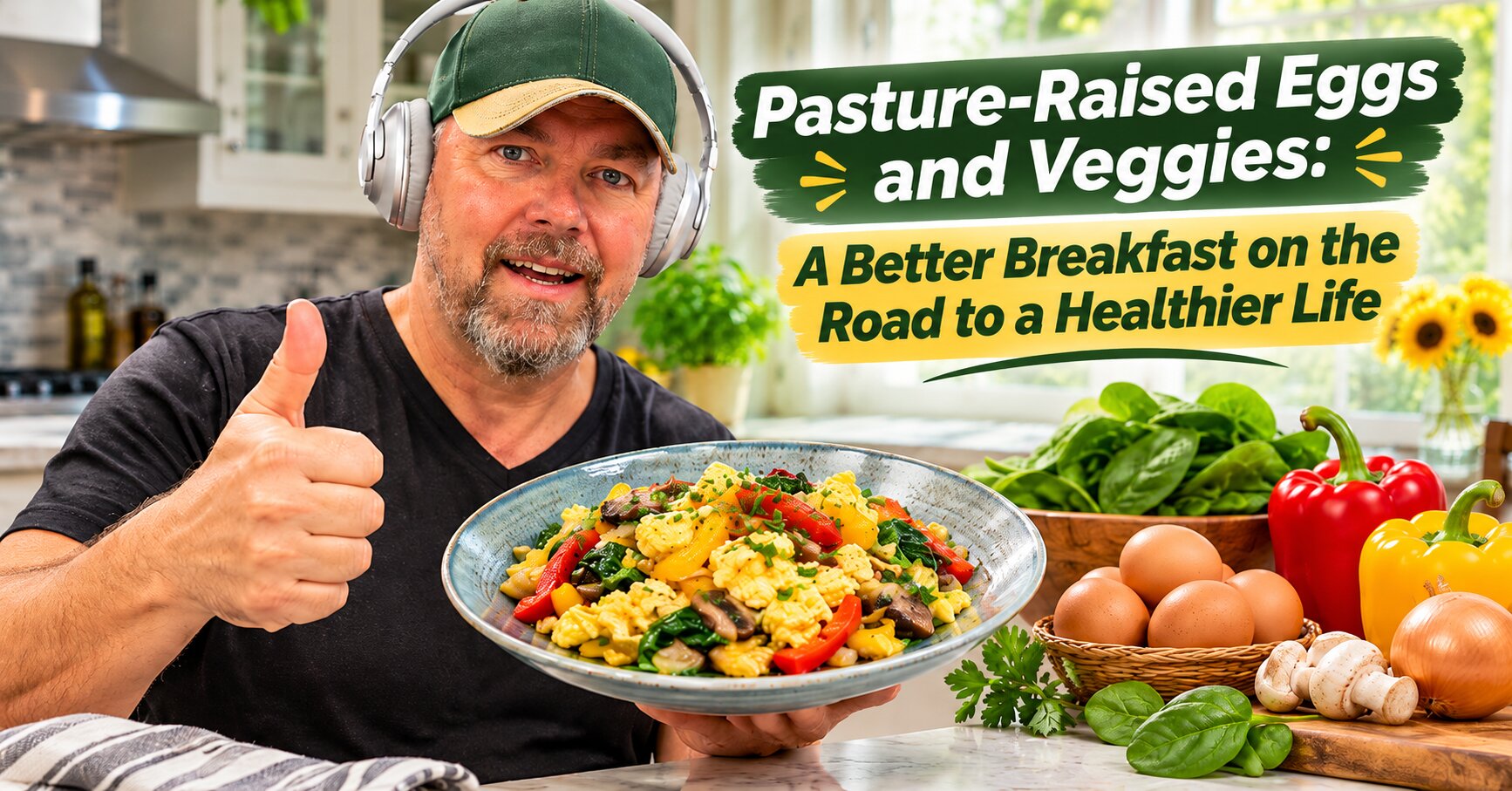
Crack two eggs into a skillet with sautéed peppers, onions, and spinach, and suddenly breakfast smells like something you’d order at your favorite diner.
That’s what I love about eggs and vegetables. You can make a delicious meal using ingredients you already have in the refrigerator while getting valuable protein, vitamins, minerals, and fiber to start your day.
But not all eggs are raised the same way.
When I shop for eggs, I look for humanely raised, pasture-raised eggs from producers who are transparent about how their hens live and what they eat.
If you’re on the road to a healthier life, this is one of the easiest breakfast habits to develop.
Today, it might be scrambled eggs with peppers and onions. Tomorrow, a mushroom omelet with spinach. Another day, fried eggs served over leftover roasted vegetables.
The possibilities are almost endless, and the ingredients don’t have to be complicated.
Watch my video:
In the video, I share why I enjoy eating eggs with vegetables and how this simple breakfast fits into my personal journey toward healthier living.
Why I Choose Humanely Raised, Pasture-Raised Eggs
When you see a carton labeled pasture-raised, what does that actually mean?
For me, it’s about more than a picture of chickens roaming through a green field.
I want to know whether the hens have access to outdoor pasture where they can move around, scratch, peck, forage, and engage in natural behaviors.
That’s why I pay attention to how eggs are produced.
One certification worth looking for is Certified Humane Pasture Raised. Under this program, farms must provide at least 108 square feet of outdoor pasture per hen, along with other animal welfare requirements.
You can learn more about these standards through Certified Humane’s guide to understanding egg carton labels.
If you purchase eggs directly from a local farmer, ask how the hens are raised, what they’re fed, and how much time they spend outdoors.
Those details tell you more than marketing language on a carton.
For me, choosing humanely raised eggs is one way to be more intentional about the food I eat.
Are Pasture-Raised Eggs Better for You?
Pasture-raised eggs can offer nutritional advantages, particularly when hens have access to a varied diet that includes forage.
One study published in Renewable Agriculture and Food Systems compared eggs from pastured hens with eggs from caged hens.
Researchers found that eggs from pastured hens contained approximately twice as much vitamin E and 2.5 times as much total omega-3 fatty acids in the conditions studied.
You can read the research on vitamins and fatty acids in eggs from pastured and caged hens.
That doesn’t mean every pasture-raised egg has exactly the same nutritional profile. Nutrient levels depend on factors such as the hens’ feed, foraging opportunities, and farming practices.
Still, it’s an interesting reason to pay attention to where your eggs come from.
Eggs Are a Great Source of Protein and Important Nutrients
Regardless of how they’re raised, eggs provide several valuable nutrients.
One large egg contains approximately six grams of protein.
Eggs also provide choline, an essential nutrient involved in normal brain and nervous system function, along with vitamins and minerals.
According to University Hospitals’ egg nutrition information, a large egg contains protein, fat, and important micronutrients.
Protein is especially useful at breakfast because it contributes to muscle maintenance and helps make a meal satisfying.
For me, pasture-raised eggs are my preferred choice when they’re available and fit my budget.
But here’s something important: You don’t have to buy the most expensive eggs to make a nutritious breakfast.
Combining regular eggs with a generous portion of vegetables is still an excellent way to build a balanced meal.
Why Adding Vegetables Makes Eggs Even Better
Eggs are nutritious by themselves, but I think they become an even better meal when you add vegetables.
Here’s why.
Eggs provide protein and fat, but they don’t provide dietary fiber.
Vegetables help fill that gap.
Adding spinach, peppers, mushrooms, broccoli, or onions introduces additional nutrients, fiber, flavor, and texture.
And you don’t have to eat a boring plate of steamed vegetables to get those benefits.
Vegetables Add Fiber
Fiber helps support healthy digestion and contributes to feelings of fullness.
A plain egg contains no fiber, but adding vegetables makes the meal more balanced.
You can also explore our article on how to stop eating when you’re full for another approach to developing healthier eating habits.
Vegetables Add Vitamins and Minerals
Different vegetables bring different nutrients to your breakfast.
Spinach provides folate and vitamin K.
Bell peppers are a good source of vitamin C.
Mushrooms contribute B vitamins and other nutrients.
Onions add flavor along with beneficial plant compounds.
Broccoli provides fiber, vitamin C, and vitamin K.
Combining several vegetables also makes your plate more colorful and interesting.
Vegetables Make Breakfast More Filling
When you add vegetables to scrambled eggs, you’re increasing the volume of the meal without relying entirely on additional eggs, cheese, or breakfast meats.
That’s especially helpful when you’re trying to make your meals more satisfying while being mindful of portions.
And personally, I think eggs taste better with vegetables.
The sweetness of sautéed peppers, the savory flavor of mushrooms, and the freshness of spinach make a simple breakfast something worth looking forward to.
My Go-To Pasture-Raised Egg and Veggie Scramble
You don’t need a complicated recipe to enjoy a great breakfast.
This is a simple combination I recommend trying.
Ingredients
- 2 pasture-raised eggs
- 1 teaspoon olive oil
- ¼ cup chopped bell pepper
- ¼ cup chopped onion
- ½ cup sliced mushrooms
- 1 handful baby spinach
- Salt and black pepper to taste
- Optional: salsa, chopped chives, or sliced avocado
How to Make It
Step 1: Cook the vegetables.
Heat the olive oil in a skillet over medium heat.
Add the chopped peppers, onions, and mushrooms.
Cook for approximately five minutes, stirring occasionally, until the vegetables soften and the mushrooms release most of their moisture.
Step 2: Add the spinach.
Place a handful of fresh spinach into the skillet.
Stir until it wilts.
Step 3: Prepare the eggs.
Crack two eggs into a bowl and beat them lightly with a fork.
Add a little salt and black pepper.
Step 4: Scramble everything together.
Lower the heat to medium-low.
Pour the beaten eggs over the cooked vegetables.
Gently stir with a spatula until the eggs are cooked to your preferred consistency.
Step 5: Serve and enjoy.
Transfer everything to a plate.
For extra flavor, add a spoonful of salsa, fresh chives, or a few slices of avocado.
That’s it.
A simple breakfast with protein, vegetables, and plenty of flavor.
My Favorite Cooking Tip
Cook your vegetables before adding the eggs.
Mushrooms, zucchini, tomatoes, and several other vegetables release moisture as they heat.
If you add raw vegetables directly to scrambled eggs, the mixture can become watery.
Giving the vegetables a few minutes to cook first improves both their flavor and texture.
Four Delicious Ways to Change Up Your Eggs and Veggies
One reason I enjoy this breakfast is that it never has to taste exactly the same.
Here are four variations worth trying.
1. Southwest Egg Scramble
Combine eggs with bell peppers, onions, and a pinch of cumin.
Finish with fresh cilantro and salsa.
Add some black beans if you want an even heartier breakfast.
2. Spinach, Tomato, and Feta Omelet
Sauté chopped tomatoes to remove some of their moisture.
Add fresh spinach and let it wilt.
Pour in your eggs and sprinkle a little feta cheese over the top before folding the omelet.
3. Broccoli and Cheddar Scramble
Use leftover steamed broccoli and chop it into smaller pieces.
Warm the broccoli in a skillet, add your eggs, and finish with a small amount of sharp cheddar cheese.
This is a great way to use leftovers from dinner.
4. Roasted Vegetable Breakfast Skillet
Have leftover cauliflower, sweet potatoes, Brussels sprouts, or other roasted vegetables?
Heat them in a skillet and add eggs.
Finish with your favorite seasoning or a splash of hot sauce.
It’s simple, delicious, and helps reduce food waste.
Make Healthy Breakfasts Easier With a Little Preparation
One of the biggest challenges with healthier eating isn’t knowing what to eat.
It’s making good choices convenient enough to repeat.
If you wake up hungry and have nothing prepared, it’s easy to grab whatever is quickest.
That’s why I like keeping a few vegetables ready in the refrigerator.
You can chop peppers and onions ahead of time, wash spinach, and store leftover cooked vegetables for breakfast the next morning.
Frozen chopped vegetables can also work well.
With a little preparation, a homemade egg scramble can come together in approximately ten minutes.
And those small habits matter.
If you’re interested in making other healthy habits easier to maintain, check out our article on how to develop confidence in your ability to get healthy.
The goal isn’t to make every meal perfect.
It’s to make better choices consistently.
A Healthier Life Is About More Than One Meal
I believe the road to a healthier life is built through choices we repeat.
Breakfast is one of those opportunities.
Choosing eggs and vegetables instead of automatically reaching for highly processed breakfast foods can be one positive change.
But it’s also important to think about the bigger picture.
Regular physical activity, adequate sleep, hydration, and balanced meals all contribute to overall well-being.
You don’t have to transform your entire lifestyle overnight.
Start with something manageable.
Maybe that’s adding spinach to your eggs.
Maybe it’s replacing a sugary breakfast with a homemade scramble.
Maybe it’s taking a short walk after breakfast.
For another easy habit to build into your routine, read How to Start a Walking Routine When Your Week Is Already Full.
And if you enjoy coffee with breakfast, you might also like our article about cold brew coffee and enjoying the journey on the road to a healthier life.
The idea is to find habits that work for your lifestyle and that you genuinely enjoy.
Why I Keep Coming Back to Eggs and Vegetables
For me, the appeal is simple.
Eggs are easy to prepare, versatile, and provide useful protein.
Vegetables add flavor, texture, fiber, and nutrients.
And when I can choose humanely raised, pasture-raised eggs, I feel good about supporting farming practices that align with my preferences.
I don’t need an elaborate breakfast to feel satisfied.
Sometimes, two eggs and a skillet full of vegetables are exactly what I want.
There’s also something rewarding about preparing your own food.
You know what’s going into the pan.
You can control the seasonings.
You can choose the vegetables.
And you can experiment until you find combinations you love.
That’s what makes this breakfast such an easy habit to maintain.
Final Thoughts: Small Choices Add Up on the Road to a Healthier Life
Eating healthier doesn’t have to mean giving up meals you enjoy.
Sometimes, it means making a few thoughtful changes to foods you already love.
For me, pasture-raised eggs and fresh vegetables make a breakfast worth repeating.
You get protein from the eggs, additional nutrients and fiber from the vegetables, and the freedom to create something different each morning.
Start with two eggs and one vegetable you already enjoy.
Once that feels easy, try adding another.
Before long, you may discover that a colorful vegetable scramble is one of your favorite ways to start the day.
Remember, the road to a healthier life isn’t about being perfect. It’s about making better choices, one meal at a time.
Watch My Video: Why I Only Eat Eggs and Veggies
Want to see why I enjoy this breakfast as part of my healthier lifestyle?
Watch Why I Only Eat Eggs and Veggies | Road to a Healthier Life on YouTube.
And keep exploring Road to a Healthier Life for more ideas about healthier habits, food choices, and enjoying the journey toward better living.