

Cold Brew Coffee: Enjoying the Journey on the Road to a Healthier Life

Share

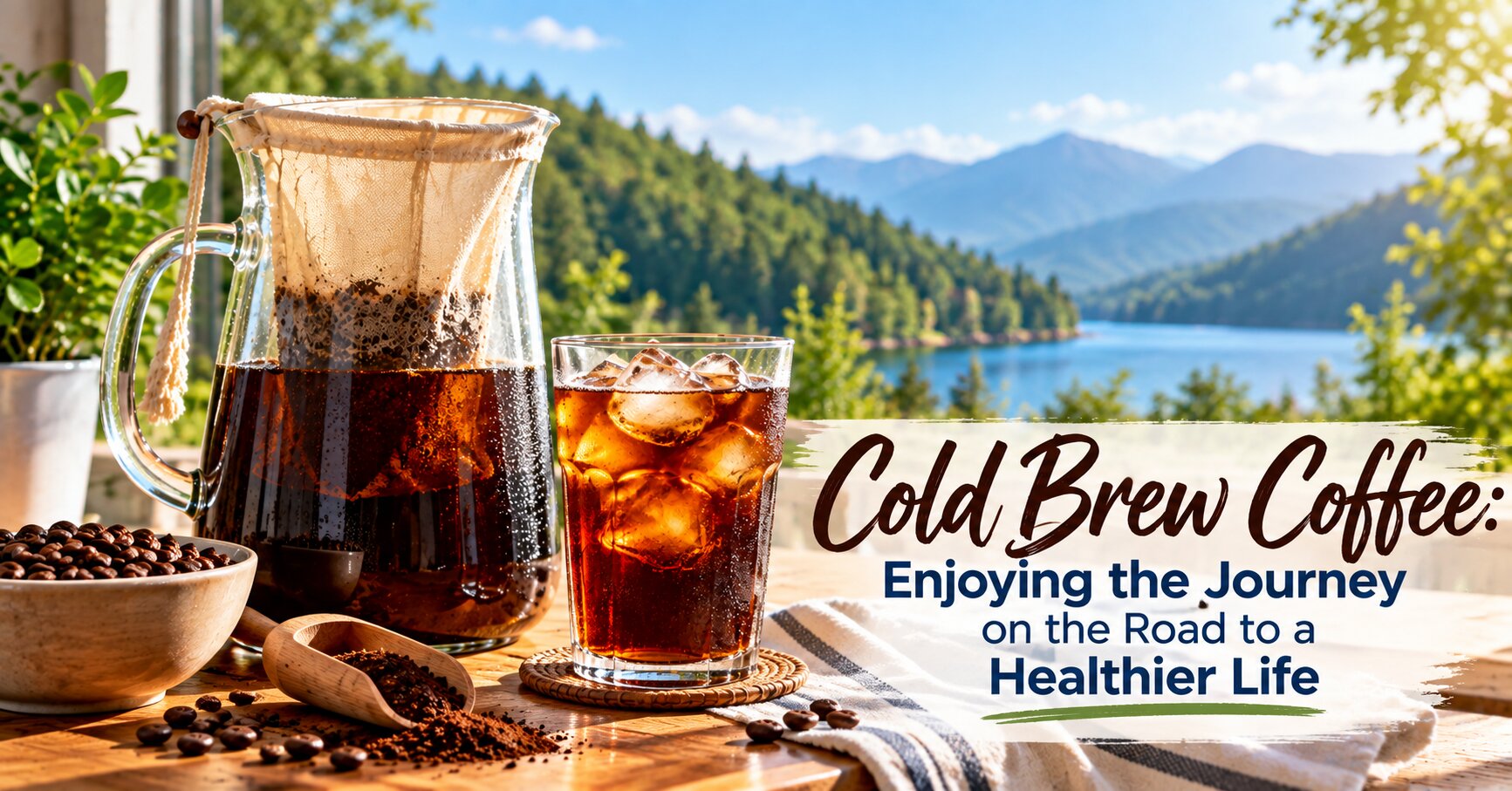
Some mornings deserve more than grabbing a coffee and rushing out the door. They deserve a moment to breathe, look around, and enjoy something you made yourself.
Cold brew fits that kind of morning beautifully.
For anyone who loves smooth coffee, simple routines, and having control over what goes into their drink, cold brew is one of the easiest ways to enjoy coffee at home. You can prepare it ahead of time, pour it over ice the next morning, and bring it along for the day.
That’s part of what the Road to a Healthier Life is all about. It isn’t about trying to make every food or drink perfect. It’s about making better everyday choices, paying attention to what works for you, and enjoying the process along the way.
Sometimes that means making your morning coffee a little simpler.
Why Cold Brew Makes Such Good Coffee
Cold brew is coffee steeped in cool or cold water over several hours.
Iced coffee is different. It usually begins as hot-brewed coffee that is later cooled and served over ice. With cold brew, the grounds spend hours in cool water, creating a different flavor profile.
Depending on the beans, cold brew can taste smooth, mellow, chocolatey, nutty, or even slightly sweet without adding sugar. For people who don’t enjoy some of the sharper flavors found in hot coffee, cold brew can be a welcome change.
It also makes mornings easier.
Prepare a batch ahead of time and your coffee is already waiting in the refrigerator. There is no need to turn on a coffee machine and start the entire process while you’re still waking up.
Just pour, taste, and enjoy.
Your Glass Pitcher Can Do the Job
You don’t necessarily need to buy an expensive cold brew system.
If you already own a clean, food-safe two-liter glass pitcher, you can use it for cold brew. It doesn’t matter if the pitcher was originally sold for hot coffee. The container doesn’t need to have “cold brew” written on the box.
What helps is having a filter that keeps the coffee grounds together while still allowing water to circulate through them.
A reusable cotton cold brew bag can be a particularly simple solution because a flexible bag can work with different container shapes.
Look for one designed for approximately two-quart batches. Before ordering, check the dimensions and make sure the opening of your pitcher is large enough to comfortably insert and remove the bag after the grounds have absorbed water.
Remember that coffee grounds expand when wet, so don’t stuff the filter completely full.
What to Look for When Buying a Cold Brew Filter
If you’re shopping online, try searching Amazon for terms such as:
“CoffeeSock 64 oz cold brew filter”
or
“reusable cotton cold brew coffee bag.”
You don’t need to buy another pitcher if you already own one that works.
CoffeeSock’s reusable cold brew filters are made from organic cotton and are available in different batch sizes.
Whatever brand you choose, look for a food-contact filter with clear instructions for use, washing, drying, and storage.
A stainless-steel mesh insert is another option, but you’ll need to pay closer attention to its diameter and height. A rigid filter that doesn’t fit through the opening of your pitcher isn’t going to do you much good.
That’s one reason I like the simplicity of a flexible cotton bag.
One important distinction: choosing cotton instead of another filter material does not automatically make the coffee itself healthier. The practical advantages are simplicity and reusability. Keeping any reusable filter properly cleaned and dried is what matters.
Fresh Whole Beans, Including Costco Finds
You don’t have to visit an expensive specialty coffee shop every week to experiment with cold brew.
Costco carries whole-bean coffee, including options that can work well for cold brewing.
Whole beans are ideal when you have a grinder because grinding shortly before brewing helps preserve the coffee’s aroma and flavor.
But don’t assume a large bag of coffee is automatically freshly roasted simply because you bought it at Costco or another busy retailer. Look for freshness information when available and buy an amount you can realistically use.
If you’re new to cold brew, a medium roast is a good place to begin. From there, experiment.
You may discover that you prefer a darker, richer coffee over ice, or you may like the lighter characteristics of another roast.
Store your beans in an airtight container somewhere cool, dry, and away from direct sunlight.
Do You Need a Burr Grinder?
First, it’s called a burr grinder, not a “burger grinder.”
Easy mistake, and burger grinder admittedly sounds more interesting.
A burr grinder crushes coffee beans between two grinding surfaces. A blade grinder, by comparison, chops the beans using rapidly spinning blades.
A burr grinder is generally preferred when you want consistent coffee because it produces more uniformly sized coffee particles. That consistency can make it easier to repeat a batch you really enjoyed.
But here’s the important part:
You do not need to buy a burr grinder just to start making cold brew.
If you aren’t ready to purchase one, buy coffee that has already been ground appropriately for cold brew or ask a coffee shop to grind your whole beans coarsely.
Use what you have.
If you fall in love with making cold brew and want greater control over the flavor, then a good burr grinder may become a worthwhile upgrade later.
That philosophy applies to a lot more than coffee.
A healthier lifestyle doesn’t require buying every piece of equipment on day one. Start with something manageable, learn from the experience, and improve your routine over time.
Why a Coarse Grind Works Well for Cold Brew
For this type of immersion cold brew, start with coffee grounds resembling coarse sea salt.
The coffee will remain in contact with the water for many hours, so you don’t need the fine grind used for espresso.
Coarser grounds can also make filtering easier. Very fine particles may escape some filters and create more sediment at the bottom of the pitcher.
And don’t simply put whole coffee beans into the water.
Grinding increases the amount of coffee exposed to the water, allowing the flavor compounds to be extracted much more effectively.
If your first batch isn’t perfect, don’t give up.
If it tastes weak, experiment with a little more coffee or a longer steeping time.
If it is stronger than you enjoy, dilute the finished coffee with water or milk.
Change one variable at a time. That way, you’ll know what actually improved your next batch.
A Simple Cold Brew Recipe for a Two-Liter Pitcher
Here’s an easy starting point:
150 grams of coarsely ground coffee
1.5 liters of cold drinking water
This leaves some extra room inside a two-liter pitcher for the filter and expanding wet coffee grounds.
Put the ground coffee into your filter according to the manufacturer’s instructions.
Slowly add the water and make sure all the grounds become wet. Secure the bag or filter, but don’t compress the coffee grounds into a hard ball. You want water to be able to move around the coffee.
Cover the pitcher.
Place it in the refrigerator for approximately 18 to 24 hours.
Then remove the coffee bag and allow the excess liquid to drain.
Before adding anything, taste it.
That’s part of the fun.
If the coffee is stronger than you prefer, add a little water. If you like the strength, pour it directly over ice.
Keep the remaining cold brew refrigerated in a clean, covered container.
After a couple of batches, you’ll probably develop your own recipe based on the beans, grind, steeping time, and strength you enjoy.
Make the Healthy Part Simple
Cold brew isn’t automatically healthier than hot coffee simply because it is cold brewed.
For me, one of the biggest advantages of making coffee at home is control.
You control what goes into the glass.
You control the portion.
You decide whether you want it black, with milk, or with something else.
A perfectly simple cup of coffee can become a very different drink when it’s loaded with flavored syrups, sugar, whipped toppings, and heavily sweetened creamers.
If you enjoy your cold brew black, great.
If not, try a splash of unsweetened milk or another addition you genuinely enjoy.
The point isn’t to turn coffee into another source of dietary anxiety. Healthy living should still leave room for enjoying the foods and drinks you love. We’ve talked about this before in our guide to enjoying an indulgence without overdoing it.
It’s really about paying attention to what you’re drinking, how much you’re having, and how it makes you feel.
Small choices repeated consistently are often more realistic than trying to change everything overnight.
Remember That Cold Brew Still Contains Caffeine
One misconception worth clearing up is that cold brew is automatically low in caffeine.
It isn’t necessarily.
The amount of caffeine in your glass depends on several factors, including the coffee beans, how much ground coffee you use, brewing time, serving size, and how much you dilute the finished cold brew.
That’s particularly important because cold brew can taste remarkably smooth.
Don’t assume that a smoother flavor automatically means less caffeine.
If you’re sensitive to caffeine, pay attention to the amount you’re drinking and how your body responds.
You can also make cold brew using decaffeinated coffee beans.
The process is essentially the same, so you can still enjoy the ritual, flavor, ice-cold glass, and convenience without making caffeine a major part of your day.
Cold Brew Can Become a Great Morning Ritual
There is something satisfying about opening the refrigerator in the morning and seeing a pitcher of coffee you prepared the night before.
No rushing.
No drive-through.
No waiting for a machine.
Pour some over ice.
Sit outside for a few minutes.
Have it before a morning walk.
Bring it along for a drive.
Sometimes a healthier lifestyle isn’t about dramatic changes. It’s about improving ordinary moments and becoming more intentional about the little decisions you make every day.
Making your own coffee is a small thing.
But that’s exactly the point.
Not every healthy habit needs to transform your life overnight.
This Is Also a Great Video Experiment
This entire process would make a great video because you don’t need a studio or elaborate production.
Show the actual experience.
Show the whole beans.
Show how coarse you’re grinding them.
Show the cotton filter.
Show your two-liter glass pitcher.
Add the water.
Put it into the refrigerator.
Then come back the next day and show the result.
Most importantly, taste it on camera.
Was it too strong?
Too weak?
Smooth?
Chocolatey?
Would you use fewer grounds next time?
Would you steep it longer?
That’s what makes the content interesting.
You don’t need to pretend your first attempt was perfect. A real experiment is more useful because someone watching can learn along with you.
You might even discover a recipe you enjoy enough to make every week.
Enjoy Your Coffee and Enjoy the Journey
The Road to a Healthier Life isn’t a destination you suddenly reach one morning.
It’s a road.
Some days you’ll make great choices.
Some days you won’t.
Sometimes you’ll discover a new food, routine, exercise, or habit that works for you.
And sometimes you’ll discover that your homemade cold brew needs a little more coffee next time.
That’s part of it.
Life isn’t a destination. It’s the trip you’re enjoying.
So grind some good coffee, put it in your glass pitcher, let it slowly brew in the refrigerator, and enjoy that first cold glass the next morning.
Take it on a drive.
Drink it before a walk.
Sit outside and enjoy it without rushing.
Pay attention to the little things that make your day better.
Because being on the Road to a Healthier Life doesn’t mean giving up the things you enjoy.
Sometimes it simply means learning how to enjoy them a little more thoughtfully.